The King’s War | Mark 8:27–38

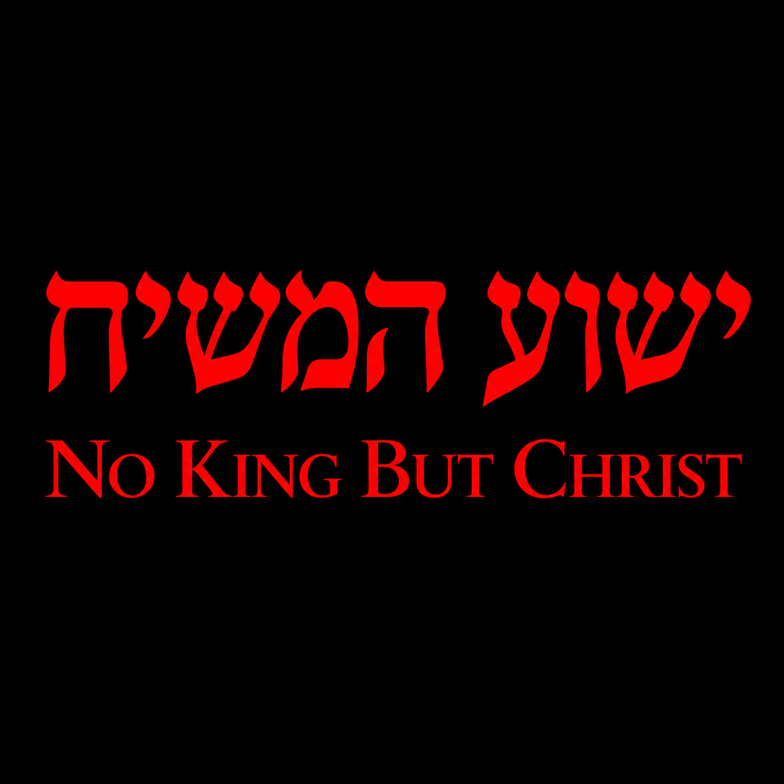
What war are you fighting?
The King’s War
Mark 8:27–38 | Geneva Bible 1599
Alexander the Great conquered an empire spanning approximately two million square miles in just thirteen years. Before reaching his thirty-third birthday, he had defeated the Persian Empire, conquered vast territories, and become one of history's greatest military commanders.
Then he died.
Throughout history, men have fought wars for territory, power, freedom, wealth, and national survival. Some have conquered entire kingdoms. Others have sacrificed everything for causes they believed were worth their lives.
But not every war is fought on a battlefield.
Some people are fighting wars nobody else can see. Wars against depression, anxiety, sickness, addiction, bitterness, financial pressure, temptation, and spiritual darkness. These battles may never make the history books, but they are just as real to the people fighting them.
The question is not simply whether we are fighting a war. Everyone is fighting something.
The question is which war we should be fighting, and how we know whether it is the right one.
In Mark 8, Jesus confronts His disciples with this very question.
Peter has finally recognized Jesus as the Messiah. But when Jesus explains what His mission will require, Peter discovers that the Messiah's war is not the war he expected.
1. The King’s War Is Not the War I Thought It Was
Mark 8:29–32 (Geneva Bible 1599)
"And he said unto them, But whom say ye that I am? Then Peter answered, and said unto him, Thou art that Christ. And he sharply charged them, that concerning him they should tell no man. Then he began to teach them that the son of man must suffer many things, and should be reproved of the Elders, and of the high Priests, and of the Scribes, and be slain, and within three days rise again. And he spake that thing boldly. Then Peter took him aside, and began to rebuke him."
Peter Recognized the Messiah but Wanted to Choose the War
Peter understood that Jesus was the Messiah. His confession, "Thou art that Christ," was a declaration that Jesus was the promised Anointed One.
Yet immediately after making this confession, Peter rebuked Jesus for announcing His coming suffering and death.
Peter understood who Jesus was, but he did not yet understand what Jesus had come to accomplish.
The Scriptures reveal several dimensions of the Messiah's identity and mission.
Yeshua HaMashiach ben Yosef — The Suffering Servant
The Messiah would suffer, be rejected, and give His life.
Isaiah 53:3–5 describes the servant as despised and rejected, wounded for our transgressions and bruised for our iniquities. Isaiah 53:7 presents Him as a lamb brought to the slaughter.
In Mark 8:31, Jesus announces that He must suffer, be rejected, be killed, and rise again.
Philippians 2:7–8 describes Christ taking the form of a servant, humbling Himself, and becoming obedient unto death.
The suffering servant is central to the mission Jesus reveals to Peter.
Yeshua HaMashiach ben David — The Conquering King
The Messiah is also the promised Son of David.
In 2 Samuel 7:12–16, God promises David a kingdom and throne established forever. Isaiah 9:6–7 declares that the government will rest upon the promised Son and that His kingdom will have no end.
Psalm 110:1 describes the Lord placing the King's enemies beneath His feet. Mark 11:9–10 records the crowds celebrating the coming kingdom of David.
Revelation 19:11–16 presents Christ as the victorious King of Kings and Lord of Lords.
The Messiah is indeed the conquering King. But His victory cannot be separated from the suffering He first announces.
Yeshua HaMashiach — Ishi, My Husband — The Promised Bridegroom
The Scriptures also describe God's relationship with His people through the imagery of marriage.
Hosea 2:16 declares, "Thou shalt call me Ishi," meaning "my husband." In Hosea 2:19–20, God promises to betroth His people to Himself forever.
Isaiah 54:5 declares, "For he that made thee is thine husband."
Jesus identifies Himself as the Bridegroom in Mark 2:19–20. John 3:29 describes the relationship between the bride and the bridegroom, while Revelation 19:7–9 announces the marriage supper of the Lamb.
The Messiah is the suffering servant, the conquering King, and the promised Bridegroom.
Peter's difficulty was not recognizing Jesus as the Christ. His difficulty was accepting the mission Jesus revealed.
The Historical War Peter Knew
The Jewish people understood the brutality of foreign occupation.
In 4 BC, following the death of Herod the Great, uprisings erupted throughout Judea. Publius Quinctilius Varus, the Roman governor of Syria, marched against the rebellion.
According to Josephus, approximately 2,000 people involved in the uprising were crucified.
These events occurred around the period when Peter may have been a young child, although his precise birth year is unknown.
Roman crucifixion was a terrifying instrument of punishment and public intimidation. The Jewish people knew what happened to those who challenged Roman authority.
The desire for freedom from Rome was understandable. The hope for a conquering Messiah carried enormous significance in a nation living under foreign domination.
But Jesus announced something Peter did not want to hear.
The Son of Man must suffer.
He must be rejected.
He must be killed.
And after three days, He would rise again.
Peter wanted the Messiah, but he wanted to determine the war the Messiah would fight.
Jesus answered him in Mark 8:33:
"Get thee behind me, Satan: for thou understandest not the things that are of God, but the things that are of men."
The difference was between the things of God and the things of men.
Peter was thinking about the war from a human perspective. Jesus was revealing the purposes of God.
What Hope Remains When the War Cannot Be Changed?
The question becomes particularly significant for people whose circumstances may never change.
Consider a person serving a life sentence in prison. The daily environment can be filled with conflict, frustration, and exhaustion. Some prisoners describe feeling that fighting is the only way to earn money or survive within that environment.
Eventually, the question becomes deeply personal: What is there left to hope for?
That same question can arise in many circumstances. Chronic sickness, permanent disability, grief, financial hardship, and the lasting consequences of past decisions can leave people wondering whether life still has meaning.
Scripture offers two important truths.
First, God promises to make all things new.
Revelation 21:5 declares:
"And he that sat upon the throne said, Behold, I make all things new. And he said unto me, Write: for these words are true and faithful."
Acts 3:21 speaks of "the times of restitution of all things," promised by God through His prophets.
The Christian's hope extends beyond the circumstances of this present life. God's promise is not merely to improve the present world but ultimately to restore all things.
Second, heavenly things can be pursued today.
Philippians 4:8 declares:
"Finally, brethren, whatsoever things are true, whatsoever things are honest, whatsoever things are just, whatsoever things are pure, whatsoever things are lovely, whatsoever things are of good report; if there be any virtue, and if there be any praise, think on these things."
Even when circumstances cannot be changed, a person can pursue truth, virtue, righteousness, and the things of God.
The promise of future restoration does not make the present meaningless.
It provides a reason to live for what is eternal, even when the present battle is difficult.
2. The King’s War Is Worth My Life
Mark 8:35–36 (Geneva Bible 1599)
"For whosoever will save his life, shall lose it: but whosoever shall lose his life for my sake and the Gospel's, he shall save it. For what shall it profit a man, though he should win the whole world, if he lose his soul?"
Even If Peter Saved Israel from Rome, Eventually Everyone Would Die
Suppose Peter had received exactly the victory he wanted.
Suppose Israel had been liberated from Roman occupation. Suppose the Roman armies had been defeated and Jewish political independence restored.
Eventually, everyone who celebrated that victory would die.
Even if the Messiah had come only as a conquering earthly king, the problem of death would remain.
What about death, hell, and the grave?
Political freedom, military victory, and earthly accomplishments can be significant. But none of them can ultimately conquer death.
Jesus came to accomplish something greater than victory over Rome.
His suffering, death, and resurrection were central to His mission.
The greatest enemy was not simply a foreign army. Humanity needed a victory that reached beyond the grave.
The Greatest Conquerors Could Not Conquer Death
Alexander the Great conquered an empire stretching from Greece toward India. He defeated the Persian Empire and became one of the greatest military commanders in history.
He died at thirty-two.
Napoleon Bonaparte conquered much of Europe, commanded hundreds of thousands of soldiers, and reshaped European politics and military history.
He died at fifty-one.
George Washington commanded the Continental Army, helped secure American independence, and became the first president of the United States.
He died at sixty-seven.
These men accomplished extraordinary things.
They won battles, commanded armies, established governments, and influenced generations.
Yet none could escape death.
Jesus asks in Mark 8:36:
"For what shall it profit a man, though he should win the whole world, if he lose his soul?"
A person can conquer nations, accumulate wealth, achieve recognition, and accomplish everything the world considers successful.
But what happens when life ends?
The question Jesus raises is not merely about accomplishment. It is about the eternal value of the soul.
Does That Mean Nothing in This World Matters?
No.
Jesus does not teach that nothing in this life matters.
He tells His followers what makes a life worth giving.
Mark 8:35 declares:
"For whosoever will save his life, shall lose it: but whosoever shall lose his life for my sake and the Gospel's, he shall save it."
The distinction is found in those words: For my sake and the Gospel's.
People give their lives to many different things.
Some devote themselves to military service. Others dedicate their lives to their families, careers, ministries, communities, or causes they believe are important.
But Jesus identifies two reasons that define the life surrendered to Him.
1. The Gospel.
2. For His name's sake.
The issue is not simply whether something requires sacrifice. The issue is the purpose of that sacrifice.
The King's War is not defined by personal recognition, ambition, or the desire to accomplish something impressive.
It is defined by the Gospel and the name of Jesus Christ.
Why Plant a Church?
A simple question from a child can reveal the purpose behind a great deal of sacrifice.
Annabell once asked why we were planting a church. She was crying.
When asked why, her answer was simple:
"Because we want people to go to heaven... and to save babies in Michigan."
That answer reveals the motivation behind the work.
Church planting requires sacrifice. It involves time, finances, relationships, responsibility, and uncertainty.
But the question is not merely how much is being sacrificed.
It is why.
Is the purpose personal recognition, success, or achievement?
Or is the purpose the Gospel and the name of Jesus Christ?
That is the distinction Jesus makes in Mark 8.
How Can We Tell Whether We Are Fighting for His Name or Our Own?
David's prayer in Psalm 61 provides a powerful picture of a king who understood where his hope belonged.
David was a warrior. He commanded armies, defeated enemies, and ruled a nation.
Yet when his heart became overwhelmed, he turned to God.
Psalm 61:1–8 (KJV)
"1 Hear my cry, O God; attend unto my prayer.
2 From the end of the earth will I cry unto thee, when my heart is overwhelmed: lead me to the rock that is higher than I.
3 For thou hast been a shelter for me, and a strong tower from the enemy.
4 I will abide in thy tabernacle for ever: I will trust in the covert of thy wings. Selah.
5 For thou, O God, hast heard my vows: thou hast given me the heritage of those that fear thy name.
6 Thou wilt prolong the king's life: and his years as many generations.
7 He shall abide before God for ever: O prepare mercy and truth, which may preserve him.
8 So will I sing praise unto thy name for ever, that I may daily perform my vows."
Several expressions reveal the direction of David's heart.
"When my heart is overwhelmed."
David acknowledges his weakness. Even a king, a warrior, and a man who had experienced extraordinary victories could become overwhelmed.
"Lead me to the rock that is higher than I."
David recognizes that his strength is insufficient. He needs someone greater than himself.
His prayer is not that God would make David greater, but that God would lead him to the One who is greater.
"The heritage of those that fear thy name."
David recognizes that his inheritance comes from God and belongs to those who fear His name.
"His years as many generations."
David looks beyond the immediate moment and speaks of generations. The consequences of a life can extend far beyond the years of the person living it.
"Mercy and truth."
David appeals to God's mercy and truth rather than merely his own military strength, authority, or accomplishments.
"I will sing praise unto thy name."
The psalm ends with praise directed toward God.
Not David's name.
God's name.
This is the distinction between fighting for personal recognition and fighting for the purposes of God.
A person can be involved in good work while still being motivated by personal ambition. The outward accomplishment alone does not establish the purpose of the heart.
Jesus calls His followers to something greater.
"For my sake and the Gospel's."
Conclusion — The King’s War
Peter understood that Jesus was the Messiah, but he did not initially understand the war the Messiah had come to fight.
He recognized the Christ but resisted the announcement of His suffering and death.
Jesus confronted Peter because he was thinking about the things of men rather than the things of God.
The King's War was not the war Peter thought it was.
And yet it was the only war capable of accomplishing what humanity ultimately needed.
Alexander conquered kingdoms, but he died.
Napoleon conquered much of Europe, but he died.
Washington helped establish a nation, but he died.
Even if Peter had succeeded in liberating Israel from Rome, the people he liberated would eventually die.
But Jesus Christ came to accomplish a victory greater than earthly conquest.
He suffered, died, and rose again.
And He calls His followers to give their lives for something greater than themselves.
Mark 8:35–36 — "For whosoever will save his life, shall lose it: but whosoever shall lose his life for my sake and the Gospel's, he shall save it. For what shall it profit a man, though he should win the whole world, if he lose his soul?"
Everyone is fighting a war.
Some battles are visible. Others are hidden.
Some are fought against circumstances, while others are fought within the heart.
But the question remains whether the war being fought is for personal ambition or for the Gospel and the name of Jesus Christ.
The King's War is not the war I thought it was.
But the King's War is worth my life.